Skip

Exhibitors & products at Ambiente 2026

Rosendahl Design Group A/S

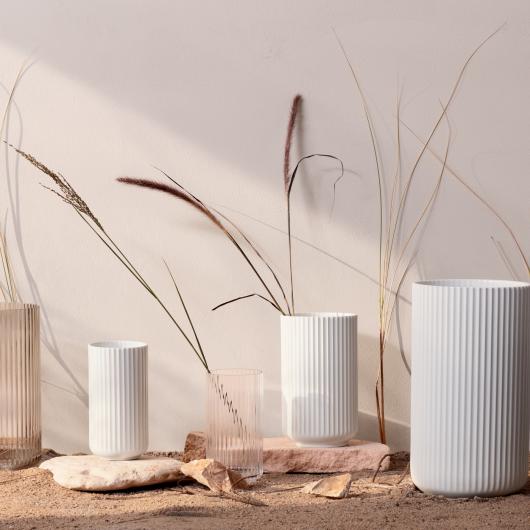
Lyngby Porcelain

Lyngby Porcelain

Rosendahl Design Group A/S

Description

Lyngby Porcelæn– handmade design since 1936

Porcelænsfabrikken Danmark – Lyngby Porcelæn was founded in Kongens Lyngby in Denmark in 1936 with the aim of producing porcelain tableware, vases and other decorative arts of high-quality craftsmanship.

Until the 1920s, ornamentation and decoration dominated designs. The focus was more on the decoration of the porcelain rather than the shape itself. But this changed over time, strongly influenced by the functionalist Bauhaus movement in Germany, and soon form and functionality became more important than the decoration itself.

Lyngby Porcelænsfabrik was furnished with the latest technology, which laid the foundation for the design legacy that Lyngby Porcelæn is known for today. With the factory, Lyngby Porcelæn was able to challenge the functionalist traditions - as seen with the Lyngby vase. Perhaps this is why the Lyngby vase became one of the most popular designs of the 1930s.

In the beginning, Lyngby Porcelæn was part of a time when people typically had both an everyday dinner service and a finer dinner service for entertaining guests. But as more and more people began to use the finer, decorative frames in their everyday lives, consumption changed, and the minimalist style now became a greater part of contemporary design.

A solid footprint on Danish design history

Lyngby Porcelæn’s factory existed from 1936 until 1969, making everything from dinnerware to vases and handicrafts. The factory closed in 1969 and the brand was at a standstill until 2012, when the Lyngby Porcelæn brand was resumed. The Lyngby vase was out of production from 1969 until 2012, but there was an ever-increasing interest in it. In 2012, production of the vase resumed, making it more accessible and able to reach more homes.

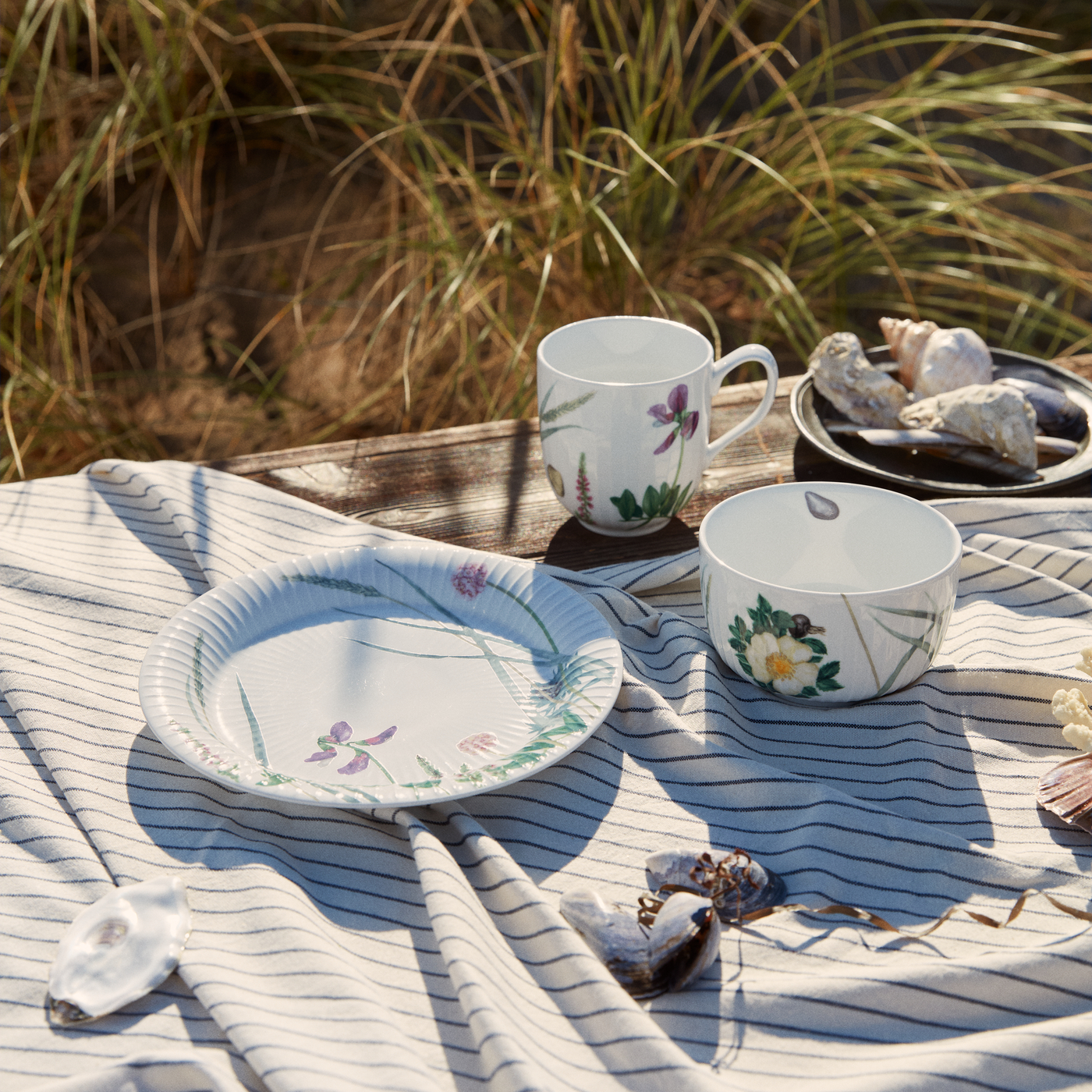
Ever since its foundation, Lyngby Porcelæn has challenged and kept up with the times, leaving its solid mark on Danish design history with its distinctive relief. A design that still stands out today. Today, Lyngby Porcelæn is behind the relaunch of iconic designs, which have been recreated with the greatest care and respect for the design legacy and in continuation of the Danish traditions from the porcelain factory.
More products by Rosendahl Design Group A/S

German Design Award Winner 2026 – Excellent Product Design

Winner of Excellent Product Design in 2 categories: Lighting and Circular Design

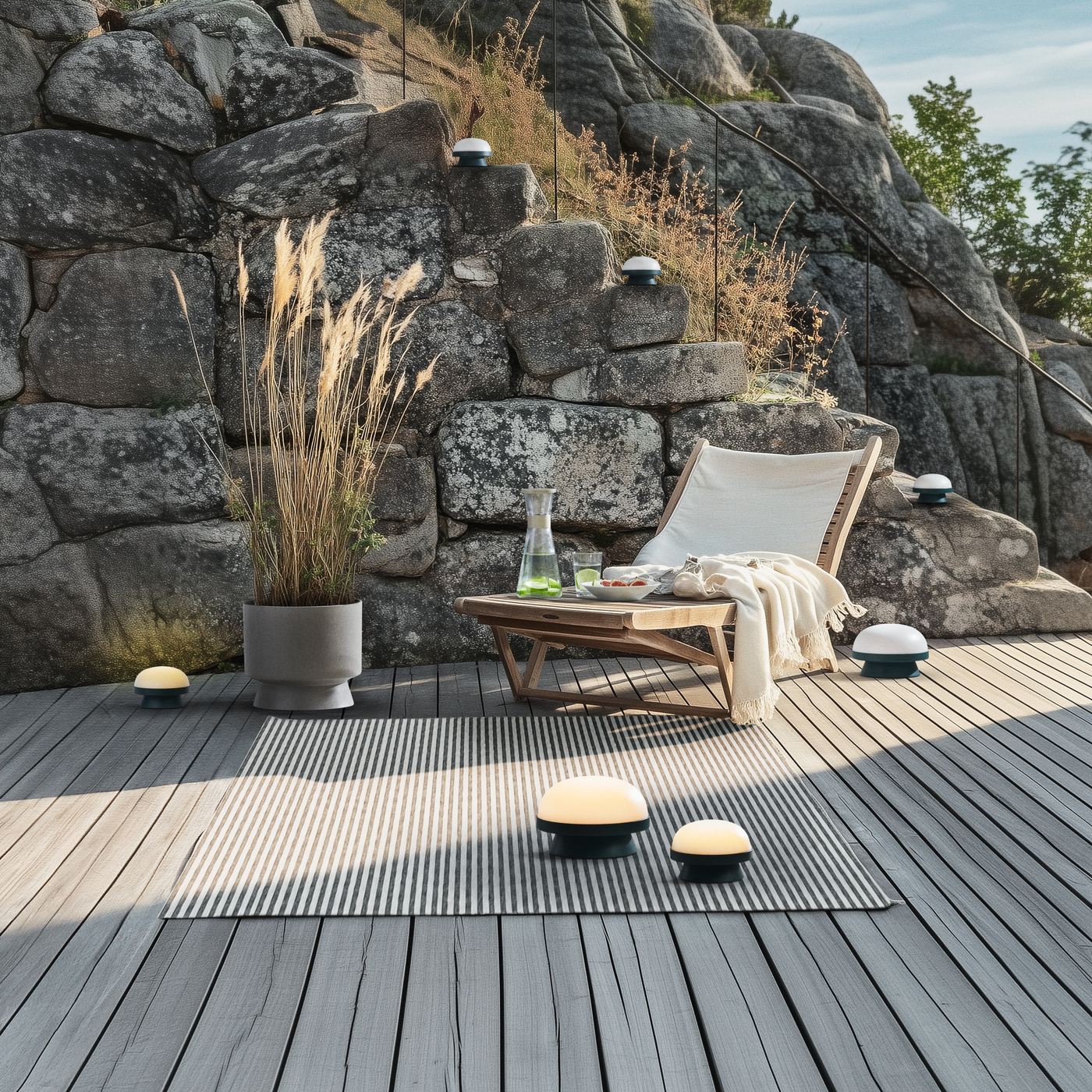
The Rosendahl Soft Spot Solar Dots lamps in recycled GRS certified materials are a stylish and visionary addition to the popular Soft Spot series created by Maria Berntsen. Made in a new and atmospheric form and colour. To be used indoors and outdoors. Summer and winter.

Both visually and functionally, Soft Spot Solar Dots excel with a smart and functional design, where a conical base creates a small lift to a floating hemisphere, and where the solar cells under the shade will start charging the lamp as soon as they are exposed to direct sunlight.

The lamp can also be charged with a USB-C cable and when the built-in dusk sensor is activated, it ensures that the light turns on automatically when it gets dark.

The lamp’s favourite weather forecast is, of course, sunshine, but it can easily withstand both rain and wind and can stand outside in temperatures down to minus 20 degrees.

The lamp comes in 3 sizes and can burn for hours. With the lamps’ lightness, practical design, and rechargeable batteries, you get the freedom to bring the light with you regardless of size – in the home, around the table, and in the garden.

Use them exactly where you want us to gather around the light and let yourself be enchanted by the small and large light spots placed around the terrace or garden, where they will look like small suns or the planets of the night sky depending on the time of day.

With the Soft Spot Solar Dots, you get the familiar portable cordless lighting design you can take with you anywhere – in a stylish GRS certified evolution with a focus on circularity. Easy and accessible.

Kay Bojesen Denmark

Kay Bojesen’s story

Silversmith and designer Kay Bojesen had a very special talent. He was able to design wood in a very special way, and he became world-famous for creating wooden animals with soul, humour and a twinkle in their eye. Kay Bojesen is one of the most productive Danish artisans of the 20th century, with more than 2,000 pieces to his name.He is best known for his joie de vivre monkeys, soldiers from the Royal Danish Guard and other wooden animals, but his large production also includes jewellery, cutlery, teapots and silver trophies.

How it all began

Kay Bojesen graduated as a silversmith in 1910 after completing his apprenticeship with the silversmith Georg Jensen. He was one of the first Danish craftsmen to be fascinated by functionalism, and he was among the initiators of “Den Permanente” - a shop and showcase that for decades represented the best in Danish and Scandinavian design.
1919 marked the start of a new era for Kay Bojesen. He got married and had his son Otto. Fatherhood sparked Kay Bojesen’s fascination with children, toys and wood and reminded him of his own childhood when his father (Ernst Bojesen - publisher of “The Octopus”) cut wooden figures and encouraged his children to be inventive, use their imagination and to have fun.

In the 1930s, Kay Bojesen began to seriously cultivate his interest in working with wood. He created a series of wooden animals that lived up to his philosophy that design should be round, soft and feel good in your hand.

He didn't want to create faithful replicas of real-life animals – not too sophisticated nor too detailed. Instead, he wanted to create imaginative variations in a design that was based on a child's perspectives where the “lines must smile”. The wooden toys should be simple, sturdy and inspire play.

With these basic ideas as a starting point, Kay Bojesen created his beloved wooden figures that appeal to the child in all of us and have ended up being design icons today.

In his lifetime, Kay Bojesen was considered to represent the fun side of Danish arts and crafts. Today, Kay Bojesen is one of Denmark’s biggest design names and his crafts are some of the most sought-after in Danish design.

Legacy

Kay Bojesen kept his childish curiosity and joie de vivre until the very end. He died at the age of 72, leaving behind a significant design legacy. A legacy that is now protected by his family.

The Rosendahl Design Group is grateful for being chosen by the Bojesen family to develop, produce and distribute their grandfather’s beloved designs. Since Kay Bojesen’s legendary store in Bredgade closed back in 1990, production of several of his products has ceased. It is therefore a great pleasure for the Rosendahl Design Group to be able to re-introduce several of Kay Bojesen’s fantastic older designs according to their original drawings and with great respect for Kay Bojesen’s high demands for material and craftsmanship.